This site is intended for US healthcare professionals only.


Request a Rep

This site is intended for U.S. healthcare professionals only.
Request a Rep


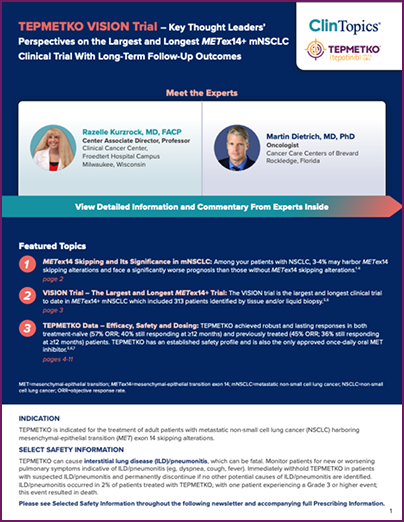
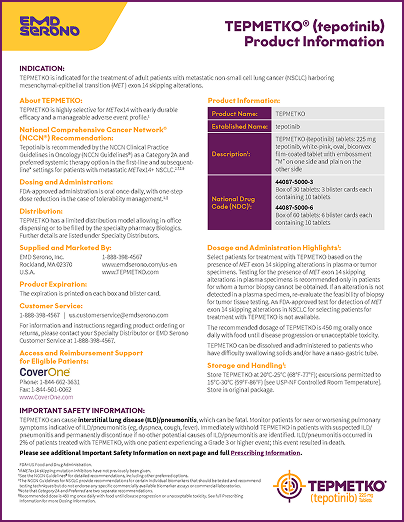
Hear from different leaders in METex14+ mNSCLC
WATCH MORE VIDEOS FROM OTHER EXPERTS BELOW
Dr. Shu
Understanding METex14
Dr. Shu
TEPMETKO Efficacy and Safety
Dr. Shu
TEPMETKO Dosing
Dr. Nguyen
Understanding METex14
Dr. Nguyen
TEPMETKO Efficacy and Safety
Dr. Nguyen
TEPMETKO Dosing
Dr. Alex Spira
Understanding METex14
Dr. Alex Spira
TEPMETKO Efficacy and Safety
Dr. Alex Spira
TEPMETKO Dosing
INDICATION
TEPMETKO is indicated for the treatment of adult patients with metastatic non-small cell lung cancer (NSCLC) harboring mesenchymal-epithelial transition (MET) exon 14 skipping alterations.
SUMMARY OF WARNINGS AND PRECAUTIONS
TEPMETKO is associated with the following Warnings and Precautions: interstitial lung disease (ILD)/pneumonitis, hepatotoxicity, pancreatic toxicity, and embryo-fetal toxicity.
Please see additional Important Safety Information at the end of this video and the accompanying full Prescribing Information for TEPMETKO.
Dr Catherine Shu
Hi. My name is Dr Catherine Shu. I'm a thoracic oncologist based out of an academic medical center in New York, New York. I have over 8 years of experience treating patients with MET exon 14 skipping metastatic non-small cell lung cancer.
An estimated 3 to 4% of patients diagnosed with non-small cell lung cancer each year in the United States have MET exon 14 skipping alterations. These patients are associated with a poor prognosis and require a targeted treatment approach.
Approximately 65% of patients with MET exon 14 skipping alterations may be PD-L1 positive, meaning greater than or equal to 1% expression. And these patients have been found to respond poorly to standard of care.
Real-world studies demonstrated positive outcomes in patients with MET exon 14 skipping who received at least one MET TKI.
The Kaplan-Meier Curves shown on this chart demonstrate a difference in median overall survival for patients with stage IV non-small cell lung cancer, harboring MET exon 14 alterations, who received treatment with at least one MET TKI versus patients with MET exon 14 skipping non-small cell lung cancer who never received a MET TKI. Those patients who received a MET TKI had a much longer median overall survival of approximately 2 years, while patients who never received a MET TKI had a median overall survival of approximately 8 months.
Because MET exon 14 skipping is a primary oncogenic driver, it plays an important role in oncogenesis in some cases of non-small cell lung cancer.
NCCN Guidelines strongly recommend that clinicians test for actionable biomarkers in eligible patients with metastatic non-small cell lung cancer. This recommendation can help identify MET exon 14 skipping alterations at diagnosis and inform treatment decisions.
One of the most important parts of diagnosis is to make sure that every lung adenocarcinoma patient gets full next-gen sequencing testing. And that’s so important because we have to be able to test for molecular alterations like MET exon 14. This is because the treatments obviously differ. And the patients with MET exon 14 are different than patients with other alterations.
The NCCN Non-Small Cell Lung Cancer Panel has stratified its preferences for the first-line therapy options for patients with MET exon 14 skipping mutation-positive metastatic non-small cell lung cancer. These are also recommended as subsequent therapy options if the patient was not previously treated with a MET inhibitor.
NCCN also recommends if a MET exon 14 skipping mutation is discovered during the first-line systemic therapy, interrupt the current therapy and start a MET inhibitor, although if there is a good response to current therapy, the NCCN considers it reasonable to continue that therapy.
Tepotinib is an NCCN Category 2A-preferred regimen for first-line and subsequent line setting for patients with MET exon 14 skipping metastatic non-small cell lung cancer.
Please continue watching for Important Safety Information for TEPMETKO.
INDICATION
TEPMETKO is indicated for the treatment of adult patients with metastatic non-small cell lung cancer (NSCLC) harboring mesenchymal-epithelial transition (MET) exon 14 skipping alterations.
SUMMARY OF WARNINGS AND PRECAUTIONS
TEPMETKO is associated with the following Warnings and Precautions: interstitial lung disease (ILD)/pneumonitis, hepatotoxicity, pancreatic toxicity, and embryo-fetal toxicity.
Please see additional Important Safety Information at the end of this video and the accompanying full Prescribing Information for TEPMETKO.
Dr Catherine Shu
Hi. My name is Dr Catherine Shu. I'm a thoracic oncologist based out of an academic medical center in New York, New York. I have over 8 years of experience treating patients with MET exon 14 skipping metastatic non-small cell lung cancer.
For my eligible patients who are diagnosed with MET exon 14 skipping metastatic non-small cell lung cancer, I start them on TEPMETKO when appropriate.
I want to give each of my eligible patients diagnosed with MET exon 14 positive metastatic non-small cell lung cancer the opportunity to receive the appropriate therapy.
The pivotal clinical trial for TEPMETKO, the VISION Trial, is the largest and longest in MET exon 14 positive metastatic non-small cell lung cancer. It included 313 patients and had a long-term follow-up of up to 6 years, ranging from 0.3 to 71.9 months. The study included both treatment-naïve and previously treated patients with MET exon 14 positive metastatic non-small cell lung cancer. All patients received TEPMETKO at 450 mg once daily until disease progression or unacceptable toxicity.
The primary analysis had a median follow-up of more than 11.8 months and the long-term follow-up had a median of 32.6 months.
The study assessed confirmed ORR as the major efficacy outcome.
Let’s take a look at the robust and lasting responses in the 164 treatment-naïve patients who received TEPMETKO as their first-line treatment.
As you can see, these long-term follow-up data showed that the overall response rate achieved with TEPMETKO was 57%.
Looking at the duration of response at long-term follow-up, 66% of patients responded for 6 months or longer, and 40% responded for a year or longer. And the duration of response range was 1.3 months to 56.6 months.
Looking at the onset of response, 66% of patients responded within 6 weeks, and 80% of patients responded within 12 weeks.
The endpoints used in the VISION Trial are really important in practice. Why? Because one of the most important things to me is the duration of response, right? The patients want to know how long they can respond on these treatments for.
Continuing with the additional data for TEPMETKO, to maximize MET inhibition, it is crucial to initiate treatment at the FDA-approved dose of 450 mg. At this starting dose, over 90% of patients achieved greater than 95% MET inhibition. In scenarios where you need to dose-reduce, TEPMETKO offers a one-step dose reduction.
As shown here, patients requiring dose reductions were able to continue to benefit from TEPMETKO. The median duration of treatment for patients with at least one dose reduction, an “n” of 69, was 11 months.
The VISION data is really important to me because even though MET exon 14 skipping is such a small population, we actually see it a lot in clinical practice. And the VISION Trial was a very robust trial with over 300 patients, meaning that I have a lot of faith in their data, and this is something that I use in my everyday practice.
The safety and tolerability of TEPMETKO were established in 313 patients. Most adverse reactions observed in the VISION Trial were Grade 1 or 2. The adverse reactions that occurred in 10% or more of patients for all grades and for Grades 3 to 4 are shown in the bar chart.
Peripheral edema, a class effect of MET inhibitors, was the most common treatment-related adverse event observed during the trial. Eight percent of patients had to permanently discontinue TEPMETKO due to edema.
Proactive monitoring for peripheral edema is recommended and may be managed with dose reduction of TEPMETKO or temporary discontinuation. For my patients who experience peripheral edema, I suggest compensatory management that includes limb elevation, compression stockings, and reduction of dietary salt.
Of patients who received TEPMETKO and experience an adverse reaction, 25% had permanent discontinuation, 53% had dosage interruptions, and 36% had dose reductions. Fatal adverse reactions occurred in 1.9% of patients, and serious adverse reactions occurred in 51% of patients.
The percentage of patients with selected laboratory abnormalities, as well as the most common Grade 3 to 4 laboratory abnormalities that were reported in the trial, are shown here.
As a treating physician, I find that every medication has its own share of side effects. And they tend to have different types of side effects.
And so, before I start a patient on TEPMETKO, I always warn them ahead of time. I tell them, you know, these are potential side effects, including peripheral edema.
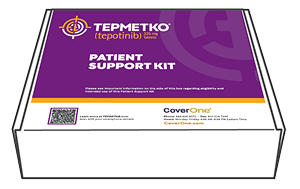
Because peripheral edema can be quite challenging to manage, there is a patient support kit available for them. This includes things like compression stockings and additional information on how best to manage their edema.
Based on the robust findings established with the VISION Trial, along with my own real-world experience, I believe that by initiating TEPMETKO and providing clinical management, I'm giving my patients a way to potentially extend their survival.
Please continue watching for Important Safety Information for TEPMETKO.
INDICATION
TEPMETKO is indicated for the treatment of adult patients with metastatic non-small cell lung cancer (NSCLC) harboring mesenchymal-epithelial transition (MET) exon 14 skipping alterations.
SUMMARY OF WARNINGS AND PRECAUTIONS
TEPMETKO is associated with the following Warnings and Precautions: interstitial lung disease (ILD)/pneumonitis, hepatotoxicity, pancreatic toxicity, and embryo-fetal toxicity.
Please see additional Important Safety Information at the end of this video and the accompanying full Prescribing Information for TEPMETKO.
Dr Catherine Shu
Hi. My name is Dr Catherine Shu. I'm a thoracic oncologist based out of an academic medical center in New York, New York. I have over 8 years of experience treating patients with MET exon 14 skipping metastatic non-small cell lung cancer.
With TEPMETKO, I can provide my patients with metastatic non-small cell lung cancer a convenient dosing regimen. TEPMETKO is one dose once a day and has a starting dosage of 450 mg, given as two 225-mg tablets. I instruct my patients to take TEPMETKO at approximately the same time every day with food. I explain that they should swallow the tablets whole and not chew, crush, or split the tablets.
I also make sure they understand that they should never make up a missed dose within 8 hours of the next scheduled dose. And if vomiting occurs after taking a dose, they should take the next dose at the scheduled time.
For my patients who have difficulty swallowing solids or have a nasogastric tube, TEPMETKO can be dissolved in water. I reference the Prescribing Information for guidance on how to dissolve the tablets before administration and review it with patients if they are taking TEPMETKO at home.
I always start patients on the full dose at 450 milligrams.
I stay with this regimen until a patient experiences disease progression or unacceptable toxicity.
For some patients, management of some adverse reactions may require a temporary interruption. If a patient needs a dosage adjustment to manage adverse reactions with TEPMETKO, I use the flexibility of a one-step reduction. This entails removing one tablet from the daily regimen, which reduces the daily dose to 225 mg. For some patients, management of some adverse reactions may require permanent discontinuation. You can refer to the Prescribing Information for further details.
In my experience, patients may find that TEPMETKO oral dosing taken once daily offers convenience.
And we try to mitigate any side effects as best we can. So, if they have edema, we try things like compression stockings. We try elevation. And it’s really only if all of those things fail that sometimes I will either have them hold drug for a little bit, and either go back to the original dose, or sometimes I have them dose-reduce.
I also find that the flexibility to reduce the dose with TEPMETKO in certain patients, if needed, to be a useful option in the ongoing treatment management of their MET exon 14 skipping metastatic non-small cell lung cancer.
Please continue watching for Important Safety Information for TEPMETKO.
INDICATION
TEPMETKO is indicated for the treatment of adult patients with metastatic non-small cell lung cancer (NSCLC) harboring mesenchymal-epithelial transition (MET) exon 14 skipping alterations.
SUMMARY OF WARNINGS AND PRECAUTIONS
TEPMETKO is associated with the following Warnings and Precautions: interstitial lung disease (ILD)/pneumonitis, hepatotoxicity, pancreatic toxicity, and embryo-fetal toxicity.
Please see additional Important Safety Information at the end of this video and the accompanying full Prescribing Information for TEPMETKO.
Dr Ryan Nguyen
My name is Dr Ryan Nguyen. I'm a medical oncologist. And I specialize in the treatment of patients with lung cancer. I practice at an academic institution in Chicago, Illinois. And I have 5 years of experience treating patients with MET exon 14 metastatic non-small cell lung cancer.
Now an estimated 3 to 4% of patients diagnosed with non-small cell lung cancer, each year in the United States, have a MET exon 14 skipping alteration. These patients are associated with a poor prognosis and require a targeted treatment approach.
Approximately 65% of patients with a MET exon 14 skipping alteration may be PD-L1 positive. And these patients have been found to respond poorly to standard of care.
In my experience, when I first meet a patient with a new diagnosis of metastatic non-small cell lung cancer, it can be an overwhelming visit. It's a lot for the patient to take in, especially between them and their family members. And what I try to tell all my patients is that I think of metastatic non-small cell lung cancer as a wide variety of diseases. Part of that includes making sure that we're taking a precision medicine approach, and that I'm personalizing my treatment to not only that patient, but also that patient's tumor in particular.
When looking historically at the outcomes of patients with MET exon 14 skipping NSCLC, these patients face a significantly worse prognosis than those without the alterations. Patients with MET exon 14 skipping NSCLC have been found to respond poorly to standard of care.
The Kaplan-Meier curve shown on this chart demonstrate the difference in median overall survival for NSCLC patients with and without MET exon 14 skipping. Those patients who harbor MET exon 14 skipping had a much shorter median overall survival of approximately 1 year. While patients without the alterations had a median overall survival of approximately 6.25 years.
In clinical practice, we typically test patients for all the biomarkers that are associated with FDA approved therapies before deciding on first line therapy. However, there are situations where patients may start on first line therapy, with either chemotherapy, or chemo immunotherapy, before their biomarkers are known. However, we know that the NCCN has been recently updated to include that, if these patients are found to have a MET exon 14 positive disease, they should be switched from their standard of care chemo immunotherapy, or chemotherapy, to a MET inhibitor.
When I first meet a patient with MET exon 14 positive metastatic non-small cell lung cancer, we're looking at a variety of different treatment options. However, I always try to personalize my treatment options to the patient, their tumor, and their different type of considerations going on in their life. I often reference the NCCN Guidelines, which, in this situation, have a preferred recommendation to treat these patients in the first line with a MET inhibitor. And so, I really, in that situation, try to match the patient with that preferred first line therapy, which is a MET inhibitor.
Tepotinib is an NCCN category 2A preferred regimen for the first line and subsequent line settings, for patients with MET exon 14 positive metastatic NSCLC. A category 2A recommendation is based upon lower-level evidence, for which there is uniform NCCN consensus that the intervention is appropriate. The NCCN Guidelines provide additional details on these recommendations, including other preferred options.
Thank you for watching.
INDICATION
TEPMETKO is indicated for the treatment of adult patients with metastatic non-small cell lung cancer (NSCLC) harboring mesenchymal-epithelial transition (MET) exon 14 skipping alterations.
SUMMARY OF WARNINGS AND PRECAUTIONS
TEPMETKO is associated with the following Warnings and Precautions: interstitial lung disease (ILD)/pneumonitis, hepatotoxicity, pancreatic toxicity, and embryo-fetal toxicity.
Please see additional Important Safety Information at the end of this video and the accompanying full Prescribing Information for TEPMETKO.
Dr Ryan Nguyen
My name is Dr Ryan Nguyen. And I'm a medical oncologist. And I specialize in the care of patients living with lung cancer. I practice at an academic institution in Chicago, Illinois. And I have 5 years of experience treating patients with MET exon 14 positive metastatic non-small cell lung cancer.
For my eligible patients who are diagnosed with MET exon 14 positive metastatic non small cell lung cancer, I start them on TEPMETKO.
TEPMETKO was studied in the VISION Trial, the largest and longest clinical trial of its kind in MET exon 14 positive metastatic NSCLC. The clinical evidence for TEPMETKO supports a robust and lasting response. I want to give each of my eligible patients diagnosed with MET exon 14 positive metastatic NSCLC the opportunity to receive the appropriate therapy.
I also choose TEPMETKO as my first choice for appropriate patients under my care who were previously treated for MET exon 14 positive metastatic NSCLC.
As I mentioned, the pivotal clinical trial for TEPMETKO, the VISION Trial, is the largest and longest in MET exon 14 positive metastatic NSCLC. It included 313 patients and had a long-term follow-up of up to 6 years, ranging from 0.3 to 71.9 months.
The study included both treatment-naive and previously treated patients with MET exon 14 positive metastatic NSCLC. All patients received TEPMETKO 450 milligrams, once daily, until disease progression or unacceptable toxicity.
The primary analysis had a median follow-up of more than 11.8 months. And the long-term follow-up had a median of 32.6 months.
Endpoints that I'm looking at, when I am looking at a patient in clinic, and deciding on what treatment, overall response rate, duration of response, these are 2 kind of key endpoints for me, because I want to see what's the chances that we're actually going to get this patient's cancer back under control. And, if we do get it under control, are we going to get a long-term response with that treatment as well?
First, let's take a look at the robust and lasting responses in the 164 treatment-naive patients who received TEPMETKO as their first line.
As you can see, these long-term follow-up data showed that the overall response rate achieved with TEPMETKO was 57%.
Looking at the duration of response at long-term follow-up, the range was 1.3 to 56.6 months. Sixty-six percent of patients responded for six months or longer. And 40% responded for a year or longer.
Continuing with the additional data from the Trial, for the total treatment-naive patient population, the duration of treatment showed that 69 patients, or 42.07%, had at least 1 dose reduction. And 100 patients, or 61%, had at least one dose interruption or delay.
Turning, now, to the previously treated patient population, we see robust and lasting responses at follow-up with TEPMETKO. The overall response rate was 45%.
And the duration of response was 1.4 to 67.6 months. Sixty-six percent of patients responded for 6 months or longer. And 36% responded for 1 year or longer.
And for the duration of treatment among the total previously treated patient population, there were 47 patients, or 31.5%, who had at least 1 dose reduction, and 84 patients, or 56%, who had at least 1 dose interruption or delay.
The safety and tolerability of TEPMETKO were established in 313 patients. Most adverse reactions observed in the VISION Trial were Grade 1 or 2. The adverse reactions that occurred in 10% or more of patients, for all grades, and for Grades 3 to 4, are shown in the bar chart.
My experience with TEPMETKO in my clinical practice has been very similar to what we saw in the VISION Trial. Peripheral edema is the most common side effect that I see.
Eight percent of patients had to permanently discontinue TEPMETKO due to edema. Proactive monitoring for peripheral edema is recommended, and may be managed with dose reduction of TEPMETKO or temporary discontinuation.
For my patients who experience peripheral edema, I suggest compensatory management that includes limb elevation, compression stockings, and reduction of dietary salt.
Of patients who received TEPMETKO and experienced an adverse reaction, 25% had permanent discontinuation, 53% had dosage interruptions, and 36% had dose reductions.
Fatal adverse reactions occurred in 1.9% of patients. And serious adverse reactions occurred in 51% of patients.
Some of the other side effects that we see in the clinical trial, such as laboratory abnormalities, are things that I keep a close eye on.
The percentage of patients with selective laboratory abnormalities, as well as those with the most common Grade 3 to 4 laboratory abnormalities, that were reported in the trial, are shown here.
My first preference is to start TEPMETKO in all of my eligible patients diagnosed with MET exon 14 positive metastatic NSCLC. Based on the robust findings established with the VISION Trial, along with my own real-world experience, I believe that, by initiating TEPMETKO and providing clinical management, I'm giving my patients a way to potentially extend their survival.
Thank you for watching.
INDICATION
TEPMETKO is indicated for the treatment of adult patients with metastatic non-small cell lung cancer (NSCLC) harboring mesenchymal-epithelial transition (MET) exon 14 skipping alterations.
SUMMARY OF WARNINGS AND PRECAUTIONS
TEPMETKO is associated with the following Warnings and Precautions: interstitial lung disease (ILD)/pneumonitis, hepatotoxicity, pancreatic toxicity, and embryo-fetal toxicity.
Please see additional Important Safety Information at the end of this video and the accompanying full Prescribing Information for TEPMETKO.
Dr Ryan Nguyen
My name is Dr Ryan Nguyen. I'm a medical oncologist and a lung cancer specialist. I practice at an academic institution in Chicago, Illinois. And I have 5 years of experience treating patients with MET exon 14 positive metastatic non-small cell lung cancer.
With TEPMETKO, I can provide my patients with metastatic non-small cell lung cancer a convenient dosing regimen.
TEPMETKO is 1 dose, once a day, and has a recommended starting dosage of 450 milligrams, given as two 225 milligram tablets.
I instruct my patients to take TEPMETKO at approximately the same time every day, with food. I explain that they should swallow the tablets whole, and not chew, crush, or split the tablets.
I also make sure that they understand that they should never make up a missed dose within 8 hours of the next scheduled dose. And if vomiting occurs after taking a dose, they should take the next dose at the scheduled time.
For my patients who have difficulty swallowing solids, or who have a nasal gastric tube, TEPMETKO can be dissolved in water.
I reference the prescribing information for guidance on how to dissolve the tablets before administration and review it with the patients if they are taking TEPMETKO at home.
Once I've started patients on the 450 milligram, once-daily dosage schedule, I stay with this regimen until a patient experiences disease progression, or unacceptable toxicity. For some patients, management of some adverse reactions may require a temporary interruption. If a patient needs a dosage adjustment to manage adverse reactions with TEPMETKO, I use the flexibility of one-step reduction. This entails removing 1 tablet from the daily regimen, which reduces the daily dose to 225 milligrams.
For some patients, management of some adverse reactions may require permanent discontinuation. You can refer to the prescribing information for further details.
In my experience, patients may find that TEPMETKO oral dosing, taken once daily, offers convenience. I also find that the flexibility to reduce the dose with TEPMETKO in certain patients, if needed, to be a useful option in the ongoing treatment management of their MET exon 14 positive metastatic NSCLC.
Thanks for watching.
INDICATION
TEPMETKO is indicated for the treatment of adult patients with metastatic non-small cell lung cancer (NSCLC) harboring mesenchymal-epithelial transition (MET) exon 14 skipping alterations.
SUMMARY OF WARNINGS AND PRECAUTIONS
TEPMETKO is associated with the following Warnings and Precautions: interstitial lung disease (ILD)/pneumonitis, hepatotoxicity, pancreatic toxicity, and embryo-fetal toxicity.
Please see additional Important Safety Information at the end of this video and the accompanying full Prescribing Information for TEPMETKO.
Dr Alex Spira
Hi. I'm Dr Alex Spira. I'm a medical oncologist with Virginia Cancer Specialists in Fairfax, Virginia. I have several years experience with MET exon 14 skipping non-small cell lung cancer.
An estimated 3 to 4% of patients diagnosed with non-small cell lung cancer each year in the United States have MET exon 14 skipping alterations. These patients are associated with a poor prognosis and require a targeted treatment approach.
Approximately 65% of patients with MET exon 14 skipping alterations may be PDL1 positive, greater than or equal to 1% expression. And these patients have been found to respond poorly to standard of care.
When looking historically at the outcomes for patients with MET exon 14 skipping non-small cell lung cancer, these patients face a significantly worse prognosis than those without the alterations. Patients with MET exon 14 skipping non-small cell lung cancer have been found to respond poorly to standard of care.
The Kaplan-Meier Curves shown on this chart demonstrate the difference in median overall survival for non-small cell lung cancer patients with and without MET exon 14 skipping. Those patients who harbor MET exon 14 skipping had a much shorter median overall survival of approximately 1 year, while patients without the alterations had a median overall survival of approximately 6.25 years.
Because MET exon 14 skipping is a primary oncogenic driver, it plays an important role in non-small cell lung cancer oncogenesis.
The National Comprehensive Cancer Network Clinical Practice Guidelines in oncology, NCCN Guidelines, strongly recommend that clinicians test for actionable biomarkers in eligible patients with metastatic non-small cell lung cancer. This recommendation can help identify MET exon 14 positive skipping alterations at diagnosis and inform treatment decisions.
The NCCN Non-Small Cell Lung Cancer Panel has stratified its preferences for the first-line therapy options for patients with MET exon 14 skipping mutation-positive metastatic non-small cell lung cancer. These are also recommended for subsequent therapy if the patient was not previously treated with a MET inhibitor.
Tepotinib is an NCCN Category 2A preferred regimen for first-line and subsequent line setting for patients with MET exon 14 positive metastatic non-small cell lung cancer. A category 2A recommendation is based upon lower-level evidence for which there is uniform NCCN consensus that the intervention is appropriate.
The NCCN Guidelines provide additional details on these recommendations, including other preferred options.
Thank you for watching.
INDICATION
TEPMETKO is indicated for the treatment of adult patients with metastatic non-small cell lung cancer (NSCLC) harboring mesenchymal-epithelial transition (MET) exon 14 skipping alterations.
SUMMARY OF WARNINGS AND PRECAUTIONS
TEPMETKO is associated with the following Warnings and Precautions: interstitial lung disease (ILD)/pneumonitis, hepatotoxicity, pancreatic toxicity, and embryo-fetal toxicity.
Please see additional Important Safety Information at the end of this video and the accompanying full Prescribing Information for TEPMETKO.
Dr Alex Spira
Hi. I'm Dr Alex Spira. I'm a medical oncologist with Virginia Cancer Specialists in Fairfax, Virginia. I have several years experience with MET exon 14 skipping non-small cell lung cancer.
For my eligible patients who are diagnosed with MET exon 14 positive metastatic non-small cell lung cancer, I start them on TEPMETKO.
TEPMETKO was studied in the VISION Trial, the largest and longest clinical trial of its kind, in MET exon 14 positive metastatic non-small cell lung cancer. The clinical evidence for TEPMETKO supports a robust and lasting response. I want to give each of my eligible patients diagnosed with MET exon 14 positive metastatic non-small cell lung cancer the opportunity to receive the appropriate therapy.
I also choose TEPMETKO as my first choice for appropriate patients under my care who were previously treated for MET exon 14 positive metastatic non-small cell lung cancer.
The VISION Trial data is meaningful to me in my practice, because the trial represents real-world patients. There were many patients from many trial sites from around the world, including community-based practices, so reflecting real-world patients. And it demonstrated very good outcomes for patients taking a targeted therapy in the confines of their home, not having to come in for infusions.
As I mentioned, the pivotal clinical trial for TEPMETKO, the VISION Trial, is the largest and longest in MET exon 14 positive metastatic non-small cell lung cancer. It included 313 patients and had a long-term follow-up of up to 6 years, ranging from 0.3 to 71.9 months. The study included both treatment-naïve and previously treated patients with MET exon 14 positive metastatic non-small cell lung cancer.
All patients received TEPMETKO, 450 milligrams, once daily, until disease progression or unacceptable toxicity. The primary analysis had a median follow-up of more than 11.8 months. And the long-term follow-up had a median of 32.6 months.
The study assessed confirmed overall response rate as the major efficacy outcome, as well as duration of response, and disease control response efficacy outcomes.
First, let's take a look at the robust and lasting responses in the 164 treatment-naïve patients who received TEPMETKO as first-line treatment.
As you can see, these long-term follow-up data show that the overall response rate achieved with TEPMETKO was 57%.
Looking at the duration of response at long-term follow-up, the range was 1.3 months to 56.6 months. Sixty-six percent of patients responded for 6 months or longer. And 40% responded for a year or longer.
Continuing with the additional data from the trial, for the total treatment-naïve patient population, the duration of treatment showed that 69 patients, or 42.07%, had at least 1 dose reduction. And 100 patients, or 61%, had at least 1 dose interruption or delay.
When patients come in with newly diagnosed metastatic non-small cell lung cancer, which has MET exon 14 skipping alterations, we're typically faced with the options of either chemo-immunotherapy or targeted treatment, such as TEPMETKO. I opt for TEPMETKO because I believe it is a better-tolerated treatment. Our patients are not necessarily fans of chemotherapy. And we're trying to avoid toxicity. Patients can be treated with once-daily dosing at home and not have to worry about coming to the office for infusions.
Turning now to the previously treated patient population, we see robust and lasting responses at follow-up with TEPMETKO. The overall response rate was 45%.
And the duration of response was from 1.4 to 67.6 months. Sixty-six percent of patients responded for 6 months or longer. And 36% of patients responded for 1 year or longer.
And for the duration of treatment among the total previously treated patient population, there were 47 patients, or 31.5%, who had at least 1 dose reduction, and 84 patients, or 56%, who had at least 1 dose interruption or delay.
In my practical experience, the efficacy endpoints in this VISION study were very reflective of real-world patient information. When you look at the response rates, there was a significant response rate. You're also looking at duration of response. And that is a very meaningful clinical impact, in my opinion and my experience, because it tells us, not only does the drug work, but it can work for a while.
The safety and tolerability of TEPMETKO were established in 313 patients. Most adverse reactions observed in the VISION Trial were Grade 1 or 2. The adverse reactions that occurred in 10% or more of patients, for all grades, and for Grades 3 to 4, are shown in the bar chart.
Peripheral edema, a class effect of MET inhibitors, was the most common treatment-related adverse event observed during the trial.
Eight percent of patients had to permanently discontinue TEPMETKO due to edema.
The most common adverse events, in my experience with the use of TEPMETKO, is in fact edema. It happens not uncommonly, but can be managed. I typically start patients with telling them to elevate their legs, such as when they're sitting at home. I actually tell them to walk around, because I believe that mobilized fluids, so more walking, is always better. But when they're at home relaxing, keep their feet elevated.
I sometimes use compression stockings. And I also tell them to try and limit their salt intake as much as they possibly can, realizing that that sometimes is tough to do in our patients with cancer. If that doesn't work, I will put in a dose adjustment or dose hold, as needed, to allow some of these effects to resolve.
Of patients who receive TEPMETKO and experience an adverse reaction, 25% had permanent discontinuation, 53% had dosage interruptions, and 36% had dose reductions.
Fatal adverse reactions occurred in 1.9% of patients, and serious adverse reactions occurred in 51% of patients.
The percentage of patients with selected laboratory abnormalities, as well as the most common Grade 3 to 4 laboratory abnormalities that were reported in the trial are shown here.
My first preference is to start TEPMETKO in all my eligible patients diagnosed with MET exon 14 positive metastatic non-small cell lung cancer. Based upon the robust findings established with the VISION Trial, along with my own real-world experience, I believe that, by initiating TEPMETKO, and providing clinical management, I am giving my patients a way to potentially extend their survival.
Thank you for watching.
INDICATION
TEPMETKO is indicated for the treatment of adult patients with metastatic non-small cell lung cancer (NSCLC) harboring mesenchymal-epithelial transition (MET) exon 14 skipping alterations.
SUMMARY OF WARNINGS AND PRECAUTIONS
TEPMETKO is associated with the following Warnings and Precautions: interstitial lung disease (ILD)/pneumonitis, hepatotoxicity, pancreatic toxicity, and embryo-fetal toxicity.
Please see additional Important Safety Information at the end of this video and the accompanying full Prescribing Information for TEPMETKO.
Dr Alex Spira
Hi. I'm Dr Alex Spira. I'm a medical oncologist with Virginia Cancer Specialists in Fairfax, Virginia.
With TEPMETKO, I can provide my patients with metastatic non-small cell lung cancer a convenient dosing regimen.
TEPMETKO is 1 dose, once a day, and has a recommended starting dosage of 450 milligrams, given as 2 225-milligram tablets.
I instruct my patients to take TEPMETKO at approximately the same time every day with food. I explain that they should swallow the tablets whole, and not chew, crush, or split the tablets. I also make sure they understand that they should never make up a missed dose within 8 hours of the next scheduled dose. And, if vomiting occurs after taking a dose, they should take the next dose at the scheduled time.
For my patients who have difficulty swallowing solids, or have a nasogastric tube, TEPMETKO can be dissolved in water. I reference the Prescribing Information for guidance on how to dissolve the tablets before administration, and review with the patients if they are taking TEPMETKO at home.
Once I've started patients on the 450 milligram once-daily dosage schedule, I stay with the regimen until a patient experiences disease progression or unacceptable toxicity.
For some patients, management of some adverse reactions may require a temporary interruption.
If a patient needs a dosage adjustment to manage adverse reactions with TEPMETKO, I use the flexibility of a 1-step reduction. This entails removing 1 tablet from the daily regimen, which reduces the daily dose to 225 milligrams.
For some patients, management of some adverse reactions may require permanent discontinuation. You can refer to the Prescribing Information for further details.
I do have significant experience with dose reductions or interruptions in my patients. I typically start with a dose interruption. So, if patients are having adverse events that is not managed very well, I'll hold it for a few days. And if it's repetitive, I'll then do a dose reduction as need be. I do find that patients, when you're holding their dose, they actually can return to a good baseline. And they can often restart the dose and use a dose reduction if there is repetitive toxicity that needs further management.
In my experience, patients may find that TEPMETKO oral dosing, taken once daily, offers convenience.
I also find that the flexibility to reduce the dose of TEPMETKO in certain patients, if needed, to be a useful option in the ongoing management and treatment of their MET exon 14 positive metastatic non-small cell lung cancer.
Thank you for watching.
EHR resources
Resources for your patients


Frequently asked questions
TEPMETKO® (tepotinib) is an FDA-approved, once-daily oral MET inhibitor indicated for adult patients with metastatic non-small cell lung cancer (mNSCLC) harboring METex14 skipping alterations.1 Please see full Prescribing Information for complete indication and usage information.
The VISION trial was the largest clinical trial in METex14+ mNSCLC (N=313), with long-term follow-up of up to 6 years.1,2 In treatment-naïve patients, TEPMETKO achieved a 57% ORR (95% CI: 49, 65).1,2 In previously treated patients, TEPMETKO achieved a 45% ORR (95% CI: 37, 53).1,2 Tepotinib (TEPMETKO) is an NCCN Category 2A–preferred regimen for both first-line and subsequent-line settings for certain patients with METex14+ mNSCLC.3 See the Efficacy page for the full dataset including duration of response and previously treated patient outcomes.
TEPMETKO is the only FDA-approved once-daily oral MET inhibitor, with a recommended starting dose of 450 mg (two 225-mg tablets) taken with food. If a dose reduction is needed, the dose can be reduced to 225 mg once daily by removing one tablet.1 See the Dosing page for complete administration instructions, including guidance for patients who have difficulty swallowing.
MET exon 14 (METex14) skipping, sometimes referred to as MET exon 14 skipping mutation, MET positive, or METex14+, is an oncogenic alteration found in approximately 3%-4% of patients with mNSCLC. It is associated with poor outcomes when a MET inhibitor is not used.4-6
METex14+ may be accurately detected through NGS or PCR-based testing. In the VISION Trial, METex14+ was identified through either PCR or NGS testing.1
MET amplification and MET exon 14 (METex14) skipping are distinct molecular alterations in the MET gene that can both drive tumor growth in NSCLC, but they differ in mechanism, detection, and clinical implications.4,7
MET inhibitors are a type of targeted therapy used to treat mNSCLC with MET exon 14 skipping mutations. These mutations cause abnormal MET signaling that drives tumor growth and survival.1
MET inhibitors, including tepotinib (TEPMETKO), block MET tyrosine kinase activity and help shut down the signaling pathways that drive cancer cell proliferation.1
Warnings and precautions for TEPMETKO (tepotinib) can include risks for interstitial lung disease/pneumonitis, hepatotoxicity, pancreatic toxicity, and embryo-fetal toxicity.1
Most adverse reactions observed in the VISION trial were mild to moderate (Grade 1 or 2). Peripheral edema was the most frequently reported adverse reaction and can be managed with proactive monitoring, dose interruption, or dose reduction.1,2,8 See the Safety page for the full adverse reaction profile, warnings and precautions, and dose modification guidance.
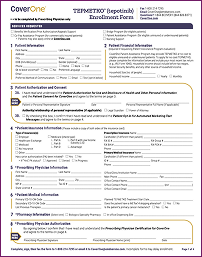
CoverOne®, EMD Serono's access and reimbursement support program, provides prior authorization assistance, co-pay support, a bridge program, personalized nursing support, and a Patient Assistance Program for eligible patients.
Your patients can also find a Patient Support Kit on the patient website or through CoverOne®.
To speak with a TEPMETKO representative, use the Request a Rep form on this site.
EHR=electronic health record; FDA=US Food and Drug Administration; JAMA=Journal of the American Medical Association; MET=mesenchymal-epithelial transition; METex14=mesenchymal-epithelial transition exon 14; METex14+=mesenchymal-epithelial transition gene exon 14 skipping alterations; mNSCLC=metastatic non-small cell cancer; NCCN=National Comprehensive Cancer Network; NGS=next-generation sequencing; NSCLC=non-small cell lung cancer; PCR=polymerase chain reaction.
IMPORTANT SAFETY INFORMATION
TEPMETKO can cause interstitial lung disease (ILD)/pneumonitis, which can be fatal. Monitor patients for new or worsening pulmonary symptoms indicative of ILD/pneumonitis (eg, dyspnea, cough, fever). Immediately withhold TEPMETKO in patients with suspected ILD/pneumonitis and permanently discontinue if no other potential causes of ILD/pneumonitis are identified. ILD/pneumonitis occurred in 2% of patients treated with TEPMETKO, with one patient experiencing a Grade 3 or higher event; this event resulted in death.
TEPMETKO can cause hepatotoxicity, which can be fatal. Monitor liver function tests (including alanine aminotransferase [ALT], aspartate aminotransferase [AST], and total bilirubin) prior to the start of TEPMETKO, every 2 weeks during the first 3 months of treatment, then once a month or as clinically indicated, with more frequent testing in patients who develop increased transaminases or total bilirubin. Based on the severity of the adverse reaction, withhold, dose reduce, or permanently discontinue TEPMETKO. Increased ALT/increased AST occurred in 18% of patients treated with TEPMETKO. Grade 3 or 4 increased ALT/AST occurred in 4.7% of patients. A fatal adverse reaction of hepatic failure occurred in one patient (0.2%). The median time-to-onset of Grade 3 or higher increased ALT/AST was 47 days (range 1 to 262).
TEPMETKO can cause pancreatic toxicity in the form of elevations in amylase and lipase levels. Increased amylase and/or lipase occurred in 13% of patients, with Grade 3 and 4 increases occurring in 5% and 1.2% of patients, respectively. Monitor amylase and lipase levels at baseline and regularly during treatment with TEPMETKO and temporarily withhold, dose reduce, or permanently discontinue based on severity of the adverse event.
TEPMETKO can cause embryo-fetal toxicity. Based on findings in animal studies and its mechanism of action, TEPMETKO can cause fetal harm when administered to a pregnant woman. Advise pregnant women of the potential risk to a fetus. Advise females of reproductive potential or males with female partners of reproductive potential to use effective contraception during treatment with TEPMETKO and for one week after the last dose.
Avoid concomitant use of TEPMETKO with certain P-gp substrates where minimal concentration changes may lead to serious or life-threatening toxicities. If concomitant use is unavoidable, reduce the P-gp substrate dosage if recommended in its approved product labeling.
Fatal adverse reactions occurred in one patient (0.3%) due to pneumonitis, one patient (0.3%) due to hepatic failure, one patient (0.3%) due to dyspnea from fluid overload, one patient (0.3%) due to pneumonia, one patient (0.3%) due to sepsis, and one patient (0.3%) from unknown cause.
Serious adverse reactions occurred in 51% of patients who received TEPMETKO. Serious adverse reactions in >2% of patients included pleural effusion (6%), pneumonia (6%), edema (5%), general health deterioration (3.8%), dyspnea (3.5%), musculoskeletal pain (2.9%), and pulmonary embolism (2.2%).
The most common adverse reactions (≥20%) in patients who received TEPMETKO were edema (81%), nausea (31%), fatigue (30%), musculoskeletal pain (30%), diarrhea (29%), dyspnea (24%), rash (21%), and decreased appetite (21%).
Clinically relevant adverse reactions in <10% of patients who received TEPMETKO included ILD/pneumonitis, fever, dizziness, pruritus, and headache.
Selected laboratory abnormalities (≥20%) from baseline in patients receiving TEPMETKO in descending order were: decreased albumin (81%), increased creatinine (60%), decreased lymphocytes (57%), increased alkaline phosphatase (ALP) (52%), increased ALT (50%), increased AST (40%), decreased sodium (36%), decreased hemoglobin (31%), increased gamma-glutamyltransferase (GGT) (29%), increased potassium (26%), increased amylase (25%), decreased leukocytes (25%), decreased platelets (24%), and increased lipase (21%).
The most common Grade 3-4 laboratory abnormalities (≥2%) in descending order were: decreased lymphocytes (15%), decreased albumin (9%), decreased sodium (9%), increased GGT (6%), increased amylase (5%), increased lipase (5%), increased ALT (4.9%), increased AST (3.6%), and decreased hemoglobin (3.6%).
INDICATION
TEPMETKO is indicated for the treatment of adult patients with metastatic non-small cell lung cancer (NSCLC) harboring mesenchymal-epithelial transition (MET) exon 14 skipping alterations.
Please see the full Prescribing Information for TEPMETKO.
Reference: 1. TEPMETKO. Prescribing information. EMD Serono, Inc.
References: 1. TEPMETKO. Prescribing information. EMD Serono, Inc. 2. Mazieres J, Paik PK, Garassino MC, et al. Tepotinib treatment in patients with MET exon 14–skipping non–small cell lung cancer: long-term follow-up of the VISION phase 2 nonrandomized clinical trial. JAMA Oncol. 2023;9(9):1260-1266. 3. Data on file. EMD Serono, Inc., Boston, MA. 4. Smit EF, Garassino MC, Felip E, et al. Tepotinib outcomes according to prior therapies in patients with MET exon 14 (METex14) skipping NSCLC. Poster presented at: European Society for Medical Oncology (ESMO) congress; September 9-13, 2022; Paris, France. Poster 985P. 5. Referenced with permission from the NCCN Clinical Practice Guidelines in Oncology (NCCN Guidelines®) for Non-Small Cell Lung Cancer V.5.2026. © National Comprehensive Cancer Network, Inc. 2026. All rights reserved. Accessed May 8, 2026. To view the most recent and complete version of the guidelines, go online to NCCN.org. NCCN makes no warranties of any kind whatsoever regarding their content, use or application and disclaims any responsibility for their application or use in any way.
References: 1. TEPMETKO. Prescribing information. EMD Serono, Inc. 2. Paik PK, Felip E, Veillon R, et al. Tepotinib in non–small-cell lung cancer with MET exon 14 skipping mutations. N Engl J Med. 2020;383(10):931-943. 3. Mazieres J, Paik PK, Garassino MC, et al. Tepotinib treatment in patients with MET exon 14–skipping non–small cell lung cancer: long-term follow-up of the VISION phase 2 nonrandomized clinical trial. JAMA Oncol. 2023;9(9):1260-1266.
References: 1. TEPMETKO. Prescribing information. EMD Serono, Inc. 2. Paik PK, Felip E, Veillon R, et al. Tepotinib in non–small-cell lung cancer with MET exon 14 skipping mutations. N Engl J Med. 2020;383(10):931-943. 3. Data on file. EMD Serono, Inc., Boston, MA. 4. Mazieres J, Paik PK, Garassino MC, et al. Tepotinib treatment in patients with MET exon 14-skipping non-small cell lung cancer: long-term follow-up of the VISION phase 2 nonrandomized clinical trial. JAMA Oncol. 2023;9(9):1260-1266.
References: 1. Awad MM, Leonardi GC, Kravets S, et al. Impact of MET inhibitors on survival among patients with non-small cell lung cancer harboring MET exon 14 mutations: a retrospective analysis. Lung Cancer. 2019;133:96-102. 2. Salgia R. MET in lung cancer: biomarker selection based on scientific rationale. Mol Cancer Ther. 2017;16(4):555-565. 3. Asad Zadeh Vosta Kolaei F, Cai B, Kanakamedala H, et al. Biomarker testing patterns and treatment outcomes in patients with advanced non-small cell lung cancer and MET exon 14 skipping mutations: a descriptive analysis from the US. Front Oncol. 2022;12:786124. 4. TEPMETKO. Prescribing information. EMD Serono, Inc. 5. Referenced with permission from the NCCN Clinical Practice Guidelines in Oncology (NCCN Guidelines®) for Non-Small Cell Lung Cancer V.5.2026. © National Comprehensive Cancer Network, Inc. 2026. All rights reserved. Accessed May 8, 2026. To view the most recent and complete version of the guidelines, go online to NCCN.org. NCCN makes no warranties of any kind whatsoever regarding their content, use or application and disclaims any responsibility for their application or use in any way. 6. Paik PK, Iams WT, Husain H, O'Hara RM Jr, Adewusi E, Le X. Tepotinib in patients with MET exon 14 skipping non-small cell lung cancer. Cancer Treat Rev. 2025;139:102990.
References: 1. TEPMETKO. Prescribing information. EMD Serono, Inc. 2. Mazieres J, Paik PK, Garassino MC, et al. Tepotinib treatment in patients with MET exon 14-skipping non-small cell lung cancer: long-term follow-up of the VISION phase 2 nonrandomized clinical trial. JAMA Oncol. 2023;9(9):1260-1266. 3. Referenced with permission from the NCCN Clinical Practice Guidelines in Oncology (NCCN Guidelines®) for Non-Small Cell Lung Cancer V.5.2026. © National Comprehensive Cancer Network, Inc. 2026. All rights reserved. Accessed May 8, 2026. To view the most recent and complete version of the guidelines, go online to NCCN.org. NCCN makes no warranties of any kind whatsoever regarding their content, use or application and disclaims any responsibility for their application or use in any way. 4. Salgia R. MET in lung cancer: biomarker selection based on scientific rationale. Mol Cancer Ther. 2017;16(4):555-565. 5. Awad MM, Leonardi GC, Kravets S, et al. Impact of MET inhibitors on survival among patients with non-small cell lung cancer harboring MET exon 14 mutations: a retrospective analysis. Lung Cancer. 2019;133:96-102. 6. Asad Zadeh Vosta Kolaei F, Cai B, Kanakamedala H, et al. Biomarker testing patterns and treatment outcomes in patients with advanced non-small cell lung cancer and MET exon 14 skipping mutations: a descriptive analysis from the US. Front Oncol. 2022;12:786124. 7. Sabari JK, Leonardi GC, Shu CA, et al. PD-L1 expression, tumor mutational burden, and response to immunotherapy in patients with MET exon 14 altered lung cancers. Ann Oncol. 2018;29(10):2085-2091. 8. Paik PK, Felip E, Veillon R, et al. Tepotinib in non–small-cell lung cancer with MET exon 14 skipping mutations. N Engl J Med. 2020;383(10):931-943.


IMPORTANT SAFETY INFORMATION
TEPMETKO can cause interstitial lung disease (ILD)/pneumonitis, which can be fatal. Monitor patients for new or worsening pulmonary symptoms indicative of ILD/pneumonitis (eg, dyspnea, cough, fever). Immediately withhold TEPMETKO in patients with suspected ILD/pneumonitis and permanently discontinue if no other potential causes of ILD/pneumonitis are identified. ILD/pneumonitis occurred in 2% of patients treated with TEPMETKO, with one patient experiencing a Grade 3 or higher event; this event resulted in death.
TEPMETKO can cause hepatotoxicity, which can be fatal. Monitor liver function tests (including alanine aminotransferase [ALT], aspartate aminotransferase [AST], and total bilirubin) prior to the start of TEPMETKO, every 2 weeks during the first 3 months of treatment, then once a month or as clinically indicated, with more frequent testing in patients who develop increased transaminases or total bilirubin. Based on the severity of the adverse reaction, withhold, dose reduce, or permanently discontinue TEPMETKO. Increased ALT/increased AST occurred in 18% of patients treated with TEPMETKO. Grade 3 or 4 increased ALT/AST occurred in 4.7% of patients. A fatal adverse reaction of hepatic failure occurred in one patient (0.2%). The median time-to-onset of Grade 3 or higher increased ALT/AST was 47 days (range 1 to 262).
TEPMETKO can cause pancreatic toxicity in the form of elevations in amylase and lipase levels. Increased amylase and/or lipase occurred in 13% of patients, with Grade 3 and 4 increases occurring in 5% and 1.2% of patients, respectively. Monitor amylase and lipase levels at baseline and regularly during treatment with TEPMETKO and temporarily withhold, dose reduce, or permanently discontinue based on severity of the adverse event.
TEPMETKO can cause embryo-fetal toxicity. Based on findings in animal studies and its mechanism of action, TEPMETKO can cause fetal harm when administered to a pregnant woman. Advise pregnant women of the potential risk to a fetus. Advise females of reproductive potential or males with female partners of reproductive potential to use effective contraception during treatment with TEPMETKO and for one week after the last dose.
Avoid concomitant use of TEPMETKO with certain P-gp substrates where minimal concentration changes may lead to serious or life-threatening toxicities. If concomitant use is unavoidable, reduce the P-gp substrate dosage if recommended in its approved product labeling.
Fatal adverse reactions occurred in one patient (0.3%) due to pneumonitis, one patient (0.3%) due to hepatic failure, one patient (0.3%) due to dyspnea from fluid overload, one patient (0.3%) due to pneumonia, one patient (0.3%) due to sepsis, and one patient (0.3%) from unknown cause.
Serious adverse reactions occurred in 51% of patients who received TEPMETKO. Serious adverse reactions in >2% of patients included pleural effusion (6%), pneumonia (6%), edema (5%), general health deterioration (3.8%), dyspnea (3.5%), musculoskeletal pain (2.9%), and pulmonary embolism (2.2%).
The most common adverse reactions (≥20%) in patients who received TEPMETKO were edema (81%), nausea (31%), fatigue (30%), musculoskeletal pain (30%), diarrhea (29%), dyspnea (24%), rash (21%), and decreased appetite (21%).
Clinically relevant adverse reactions in <10% of patients who received TEPMETKO included ILD/pneumonitis, fever, dizziness, pruritus, and headache.
Selected laboratory abnormalities (≥20%) from baseline in patients receiving TEPMETKO in descending order were: decreased albumin (81%), increased creatinine (60%), decreased lymphocytes (57%), increased alkaline phosphatase (ALP) (52%), increased ALT (50%), increased AST (40%), decreased sodium (36%), decreased hemoglobin (31%), increased gamma-glutamyltransferase (GGT) (29%), increased potassium (26%), increased amylase (25%), decreased leukocytes (25%), decreased platelets (24%), and increased lipase (21%).
The most common Grade 3-4 laboratory abnormalities (≥2%) in descending order were: decreased lymphocytes (15%), decreased albumin (9%), decreased sodium (9%), increased GGT (6%), increased amylase (5%), increased lipase (5%), increased ALT (4.9%), increased AST (3.6%), and decreased hemoglobin (3.6%).
INDICATION
TEPMETKO is indicated for the treatment of adult patients with metastatic non-small cell lung cancer (NSCLC) harboring mesenchymal-epithelial transition (MET) exon 14 skipping alterations.
Please see the full Prescribing Information for TEPMETKO.

US-TEP-01116
Last update 07/2026
© 2026 Merck KGaA, Darmstadt, Germany and/or its affiliates. All rights reserved. EMD Serono is the Healthcare business of Merck KGaA, Darmstadt, Germany, in the United States and Canada. TEPMETKO and CoverOne are registered trademarks of Merck KGaA, Darmstadt, Germany and/or its affiliates.
This website is intended for U.S. healthcare professionals only.
Use and access of this site are subject to the terms and conditions set out in our Legal Statement and Privacy Policy.
US-TEP-01116
Last update 07/2026
© 2026 Merck KGaA, Darmstadt, Germany and/or its affiliates. All rights reserved. EMD Serono is the Healthcare business of Merck KGaA, Darmstadt, Germany, in the United States and Canada. TEPMETKO and CoverOne are registered trademarks of Merck KGaA, Darmstadt, Germany and/or its affiliates.
This website is intended for U.S. healthcare professionals only.
Use and access of this site are subject to the terms and conditions set out in our Legal Statement and Privacy Policy.